

Compliance fees at natural pet retailers hit from two directions at once: KeHE or UNFI deductions on one side, retailer chargebacks on the other. Most independent brands absorb both as overhead without disputing them. That's recoverable revenue walking out the door, and the brands that stop writing it off are the ones who know exactly where to look.
TLDR:
- Natural pet food retailer compliance fees stack from two directions: distributors like KeHE and UNFI charge separately from retailers, and a single shipment can trigger fees from both.
- Many of these charges are miscalculated, duplicated, or applied to orders that met spec. Accepting them without review writes off recoverable revenue.
- Shelf life requirements are a fee category specific to pet food. Some retailers require 75% of shelf life remaining at delivery, and violations rarely appear in standard vendor guides.
- Build your documentation system before you need it: signed PODs, BOLs matched to PO numbers, and photos of pallet configuration taken before the truck leaves.
- Glimpse disputes invalid deductions from KeHE, UNFI, and independent natural pet retailers before deadlines expire, delivering an average 2.5% revenue lift, without adding headcount.
What Natural Pet Food Retailer Compliance Fees Actually Are
Natural pet food retailer compliance fees are charges that retailers and distributors impose on brands when they fall short of specific operational or promotional requirements. Think of them as a financial penalty system built into the vendor agreement you signed to get on shelf, and a direct driver of CPG margin leakage. Most are disputable. Few brands bother.
They show up under a few different names depending on the retailer:
- Slotting fees cover the cost of getting your product placed in a specific retail location or section, and independent natural pet retailers have started charging these more aggressively as shelf space gets more competitive.
- Promotional compliance fees are deducted when a brand fails to execute a required promotion correctly, or at all.
- Vendor compliance chargebacks are triggered by logistical shortfalls like late shipments, incorrect labeling, or non-compliant packaging.
The sheer volume is the problem. A brand selling into 200 independent natural pet stores is managing 200 separate compliance relationships, each with its own rules, timelines, and tolerance thresholds. That fragmentation is where invalid fees accumulate unnoticed.
How the Natural and Specialty Pet Channel Differs from Big-Box
Natural and specialty pet retailers operate on a fundamentally different set of expectations than big-box chains. Independent shops and regional co-ops in this channel sell on ingredient integrity, sourcing transparency, and brand trust, and their compliance requirements reflect that.
Where a mass-market retailer charges back for a late shipment, a natural pet retailer charges back for incomplete certifications, misaligned ingredient documentation, or a label that doesn't meet their house standards. The compliance surface area is wider, and the fees that come with it hit smaller brands disproportionately hard.
Why Independent Retailers Set Stricter Standards
These retailers answer to a customer base that reads ingredient panels and asks questions. To protect that relationship, many independents build their own vendor compliance programs on top of distributor requirements. A brand selling through a regional distributor into a natural pet shop faces compliance scrutiny from two directions at once. Clear documentation, on-time delivery, and label accuracy are table stakes — what pet retailers expect from brands goes well beyond just having a good product.
- Distributors like KeHE and UNFI have their own routing, labeling, and documentation requirements that trigger chargebacks when missed.
- The retailer may layer on additional standards around certifications, packaging claims, or shelf-ready presentation that distributors don't police.
- A single shipment can generate compliance fees from both the distributor and the end retailer, often with different dispute windows and different documentation requirements.
For brands without a dedicated compliance function, this two-layer system is where invalid fees accumulate unnoticed and go uncontested.
How Distributor Fees Layer onto Retailer Requirements
Natural pet retailers often work through major distributors like KeHE and UNFI, and those distributors run their own compliance programs on top of whatever the retailer requires. A brand that clears a retailer's on-boarding checklist can still face a separate wave of distributor-level fees before product ever hits the shelf.
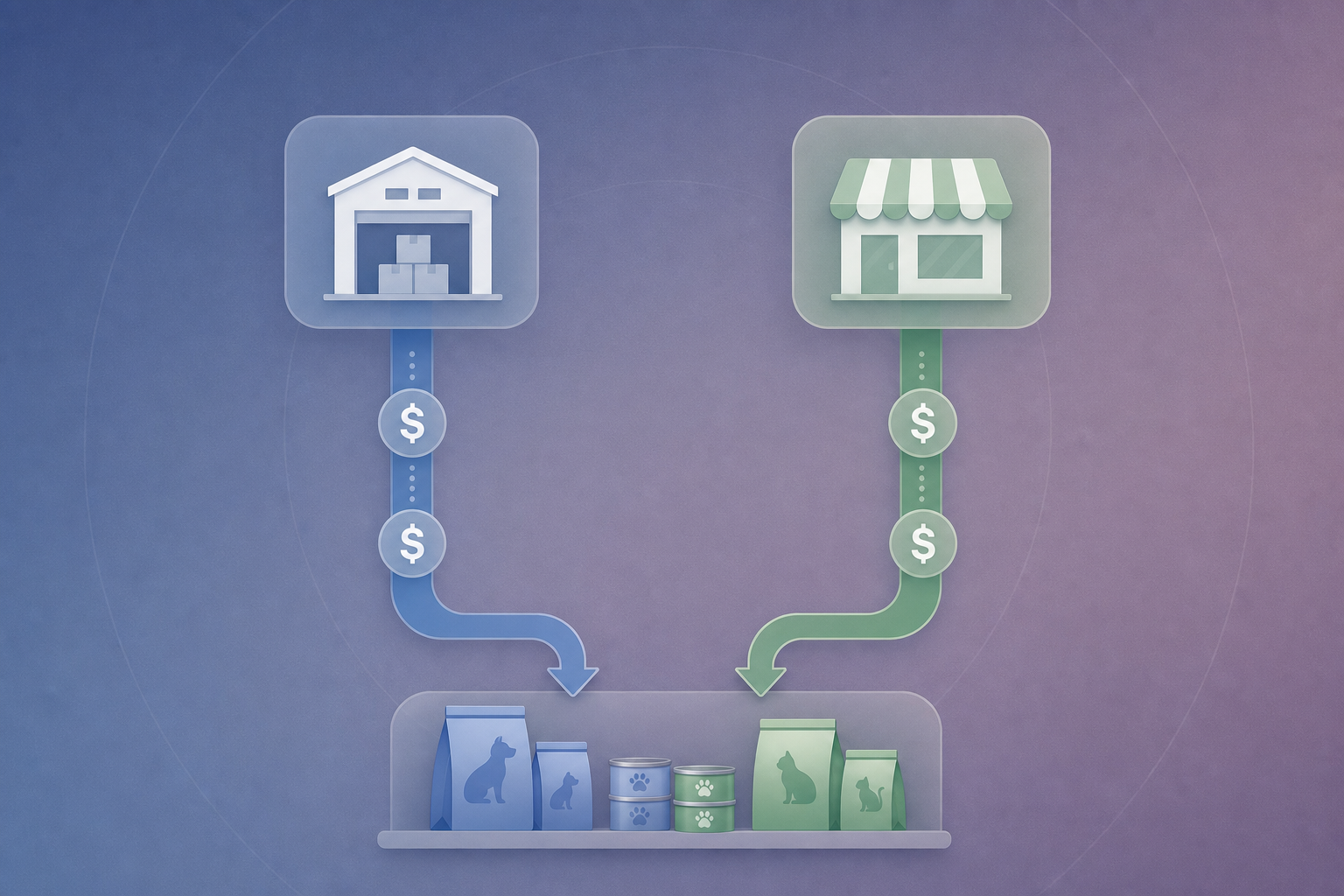
KeHE's promotional compliance and scan data reporting requirements carry their own deduction triggers. UNFI similarly charges for promotional support, warehouse handling, and in some cases new item setup fees. See advanced strategies for managing distributor deductions for a deeper breakdown of charges that compound with retailer-side requirements.
Independent brands frequently discover these only after the first invoice arrives short. By then, some dispute windows are already closing.
Where the Fee Stacking Gets Expensive
Distributor fees and retailer fees are billed separately but often reference the same underlying activity:
- A retailer may require a new item presentation fee while the distributor charges a parallel slotting or warehouse placement fee for the exact same SKU introduction, meaning a brand pays twice for one product launch.
- Promotional scan allowances owed to the retailer are often collected by the distributor as a deduction before remittance, leaving brands without clear documentation of which entity took what and under what terms.
- Handling and damage allowances applied at the distributor level frequently appear on remittance as unitemized deductions, making it harder to dispute charges that may be invalid.
Brands that track distributor deductions separately from retailer deductions catch these overlaps faster and dispute them at the right level. Glimpse does this automatically, matching charges across both channels before the dispute window closes.
Shelf Life and Expiration Requirements: A Fee Category Specific to Pet Food
Pet food carries a compliance burden that general grocery never faces: expiration dating. Natural pet retailers routinely charge brands for products arriving with insufficient shelf life remaining, and those fees can be steep.
Most independent pet brands learn the hard way. Many natural and specialty pet retailers require 75% of shelf life remaining at the time of delivery, though thresholds vary by retailer and are not always published alongside standard vendor requirements. Verify each retailer's current vendor guide before production runs are scheduled. Ship a batch of freeze-dried raw with 60% remaining, and you're looking at a rejection fee, a return freight charge, or both.
Regional distributors enforce this too. The Pet Food Experts retailer claims policy sets a 90-day minimum shelf life on delivery for standard products (refrigerated products carry a 30-day minimum) and requires photos of the expiration date and lot code for short-dated, expired, or defective product claims.
Where Brands Lose the Most Ground
The shelf life fee problem compounds in a few specific ways:
- Smaller brands often produce in shorter runs, which means product hits distribution later in its shelf life window, leaving little margin for transit delays or warehouse holds before the retailer's clock starts.
- Natural and raw formulas frequently carry shorter shelf lives than conventional pet food, which tightens the compliance window further without any corresponding adjustment to retailer requirements.
- Fee structures for shelf life violations are rarely published alongside other compliance requirements. Brands discover them reactively on remittance statements instead of during production planning. That's a core reason natural channel complexity requires dedicated infrastructure.
Getting ahead of this requires knowing each retailer's minimum remaining shelf life threshold before production runs are scheduled, not after the pallet ships.
The Most Common Compliance Fee Triggers in Natural Pet Retail
Natural pet retailers run on tight margins, and compliance programs are one of the ways they protect them. For independent pet brands, the fee triggers are buried in vendor guides that run dozens of pages, and the penalties hit before anyone on your team has read past page three.
A few triggers come up again and again. Fee data from pet retail vendor compliance programs points to a consistent range: $50 or more per carton for label errors, and $150 or more per occurrence for a missing ASN. Natural specialty retailers may run less automated programs than major e-commerce players, but the fees are just as real:
- Late or incomplete purchase order confirmation, where the retailer expects acknowledgment within a narrow window and charges a flat fee if you miss it.
- Labeling or packaging noncompliance, which can include missing certifications, incorrect weight callouts, or ingredient formatting that doesn't match the retailer's specific shelf standards.
- Routing and freight violations, where using an unapproved carrier or deviating from delivery instructions generates a chargeback regardless of whether the product arrived on time.
- Short shipments or quantity discrepancies, which natural channel buyers tend to dispute at higher rates because their inventory systems are tighter than conventional retail.
The fees vary widely: some are flat-rate, others are calculated as a percentage of the invoice, and a few retailers layer both. All of them are disputable when improperly applied.
Why Compliance Fees in This Channel Are Hard to Dispute
Natural pet retailers operate with a level of informal authority that makes their compliance programs unusually hard to push back on. When a buyer at a regional co-op or independent chain tells you a fee is "store policy," there's rarely a written contract to reference, no deduction code to look up, and no formal dispute portal to use.
The asymmetry is real: brands need shelf space and retailers know it. That power imbalance shapes compliance conversations before they begin. But it doesn't make invalid fees valid.
A few structural factors make this worse:
- Fee assessments often arrive as line-item deductions on remittance with no accompanying documentation, leaving brands to reconstruct what triggered the charge after the fact.
- Independent retailers rarely have standardized compliance manuals, so requirements shift by store, by buyer, and sometimes by season without formal notice to vendors.
- Dispute windows at smaller retailers can be verbal and informal, which means a brand that waits 30 days to escalate may find the retailer considers the matter closed.
These aren't edge cases. They're the default operating conditions for brands selling into the natural and independent channel, which is exactly why an end-to-end deduction management service that disputes and recovers on your behalf matters.
The Write-Off Trap: Why Independent Brands Accept Fees They Should Not
Many independent pet brands treat compliance fees as a fixed cost of doing business with natural retailers. That framing is wrong, and it's expensive.
A meaningful share of the fees retailers charge are miscalculated, applied to orders that met the original spec, or duplicated across invoices. Brands that accept these without review are writing off revenue they could recover, absorbing charges as fixed overhead when many of them are disputable.
Finance teams at smaller brands are stretched thin, retailer portals are cumbersome, and individual deduction amounts often feel too small to fight. They're not. Those amounts compound fast across dozens of SKUs and multiple retail partners, and that's exactly why automating deductions management changes the math entirely.
- Fees get stacked on promotional orders where the brand already compressed margin to hit a price point, making the net even worse than it appears on first review.
- Dispute windows at natural retailers are short, and missing them by even a few days forfeits your right to contest regardless of whether the charge was valid.
- Without a systematic process for tracking which fees have been reviewed versus accepted, brands pay the same type of invalid charge repeatedly across reorder cycles. It's a pattern that AI-driven deduction management is designed to break.
The write-off habit starts as a bandwidth decision. It ends as a margin problem.
How to Build a Documentation System That Reduces Compliance Chargebacks
Most chargebacks tied to compliance don't come from bad execution. They come from missing paperwork. A retailer flags a shipment, the brand can't produce documentation to dispute it, and a valid delivery becomes a written-off loss.
The fix is straightforward: build a documentation system before you need it.

What to Capture at Every Shipment
For each order touching a natural pet retailer, your team should be retaining:
- Signed proof of delivery from the carrier, including timestamps and receiver signatures, beyond a tracking confirmation.
- BOLs matched against the retailer's PO number so shortages can be cross-referenced at the line level.
- Temperature and handling logs if the product has any cold chain or handling requirements, since natural pet retailers will charge back on these without hesitation.
- Photos of pallet configuration and label placement taken before the truck leaves your facility.
Audit Your Dispute Window by Retailer
Every natural pet retailer runs a different dispute clock. A regional pet chain runs tighter windows than an independent boutique or buying group. Miss a deadline by even a few days and the deduction becomes permanent, regardless of whether your documentation is clean.
Map each retailer's dispute window into your AR calendar now. Set internal deadlines two weeks ahead of the retailer's hard cutoff, or use a deductions management platform that tracks them automatically and files disputes before deadlines expire. That buffer is where disputes actually get filed.
The documentation exists. The window closes anyway. That's the failure mode most brands don't catch until it's already cost them.
How Glimpse Supports Pet Brands Managing Compliance Fees
Compliance fees at natural pet retailers compound. Every unverified charge you absorb sets a precedent, and retailers know it.
Pet brands working with Glimpse recover fees that would otherwise be written off, without adding headcount. Our AI agents scan deductions from KeHE and UNFI, match against purchase orders, invoices, and delivery confirmations, and dispute invalid charges before deadlines expire.
For brands selling into PetSmart or independent natural pet retailers, here's what that looks like in practice:
- Chargebacks tied to compliance violations get reviewed against actual delivery and labeling records, never rubber-stamped.
- Shortage deductions get matched to BOLs so you know which ones are real and which ones aren't.
- Fee patterns get tracked over time, so you can see which retailers are generating the most invalid charges and push back with documented history.
Across pet brands in our portfolio, that translates to an average 2.5% revenue lift, all recovered before dispute deadlines close.
Stop Writing Off Compliance Fees in the Natural Pet Retail Channel
Selling into natural pet retail means managing complexity. Absorbing invalid fees is a different thing: it's a choice, and it's one that compounds every reorder cycle. The brands that recover the most build documentation habits before a dispute arises, track fee patterns over time, and use a managed service that disputes on their behalf.
Talk to Glimpse to find out how much of what you've been writing off is recoverable. This is revenue you've already earned.
FAQ
What are natural pet food retailer compliance fees and why do independent brands get hit hardest?
Natural pet food retailer compliance fees are financial penalties written into vendor agreements that trigger when a brand misses operational, labeling, or promotional requirements. Independent pet brands get hit hardest because they manage compliance relationships across dozens or hundreds of separate retailers simultaneously, each with its own rules, and rarely have a dedicated compliance function to catch fee stacking before it compounds.
How do KeHE and UNFI distributor compliance fees stack on top of retailer chargebacks for pet brands?
Both fees can trigger from the same shipment event, so a single SKU launch generates parallel charges from the distributor and the retailer for what is effectively one transaction. KeHE and UNFI each run their own routing, labeling, and promotional compliance programs on top of whatever the end retailer requires. The deductions arrive on separate remittances with separate documentation requirements and separate dispute windows.
What documentation should a pet brand retain to dispute natural pet retailer compliance chargebacks?
Keep signed proof of delivery with timestamps, BOLs matched against the retailer's PO number at the line level, temperature and handling logs for any cold chain products, and pallet photos taken before the truck leaves your facility. Without these records matched to specific orders, a valid delivery becomes a written-off loss the moment a retailer raises a compliance flag.
Can a pet brand realistically dispute compliance fees at independent natural retailers without a formal dispute portal?
Yes. The window closes faster than at big-box retailers and the process is less standardized. Independent natural retailers often have informal or verbal dispute timelines, so a brand that waits 30 days to escalate will find the retailer considers the matter settled. Map each retailer's dispute clock into your AR calendar with an internal deadline two weeks ahead of their hard cutoff.
What's the real cost of auto-writing off small compliance deductions at natural pet retailers?
Individual deductions look too small to fight. Across dozens of SKUs and multiple retail partners, the cumulative write-off is a margin problem. Brands that absorb invalid fees without review set a behavioral precedent: retailers learn the charges stick, and the same invalid fee categories reappear on every reorder cycle.
Anuj Mehta is co-founder and COO at Glimpse, where he oversees the customer journey from onboarding to ongoing success. He has worked with hundreds of retail brands to understand their pain points and deliver direct value with Glimpse's AI solutions.
About the Author
Anuj Mehta is co-founder and COO at Glimpse, where he oversees the customer journey from onboarding to ongoing success. He has worked with hundreds of retail brands to understand their pain points and deliver direct value with Glimpse's AI solutions.
About Glimpse
Glimpse is an AI-native deduction management service built for CPG brands selling through distributors and major retailers. Glimpse automates the entire deductions process — from coding and validation to dispute resolution — using AI agents trained on distributor- and retailer-specific rules. Glimpse automates the workflows overwhelming manual teams, disputing all the invalid deductions that manual teams can't address.
With Glimpse, over 200 brands have recovered invalid deductions, eliminated manual work, and improved bottom-line performance without adding headcount. Glimpse has processed over $1 billion in invoice volume. Backed by Andreessen Horowitz. Based in New York.